
Wood privacy fence
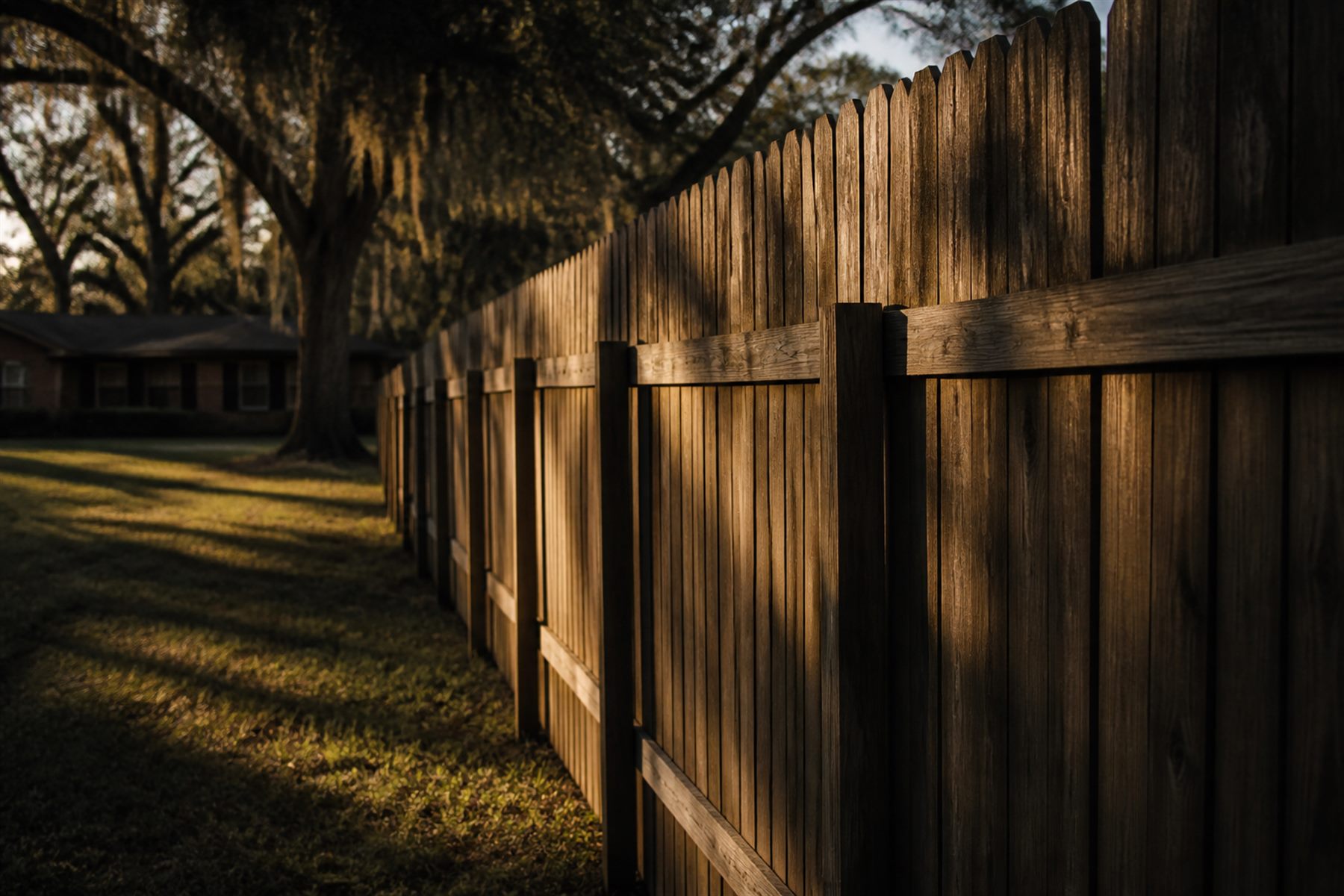
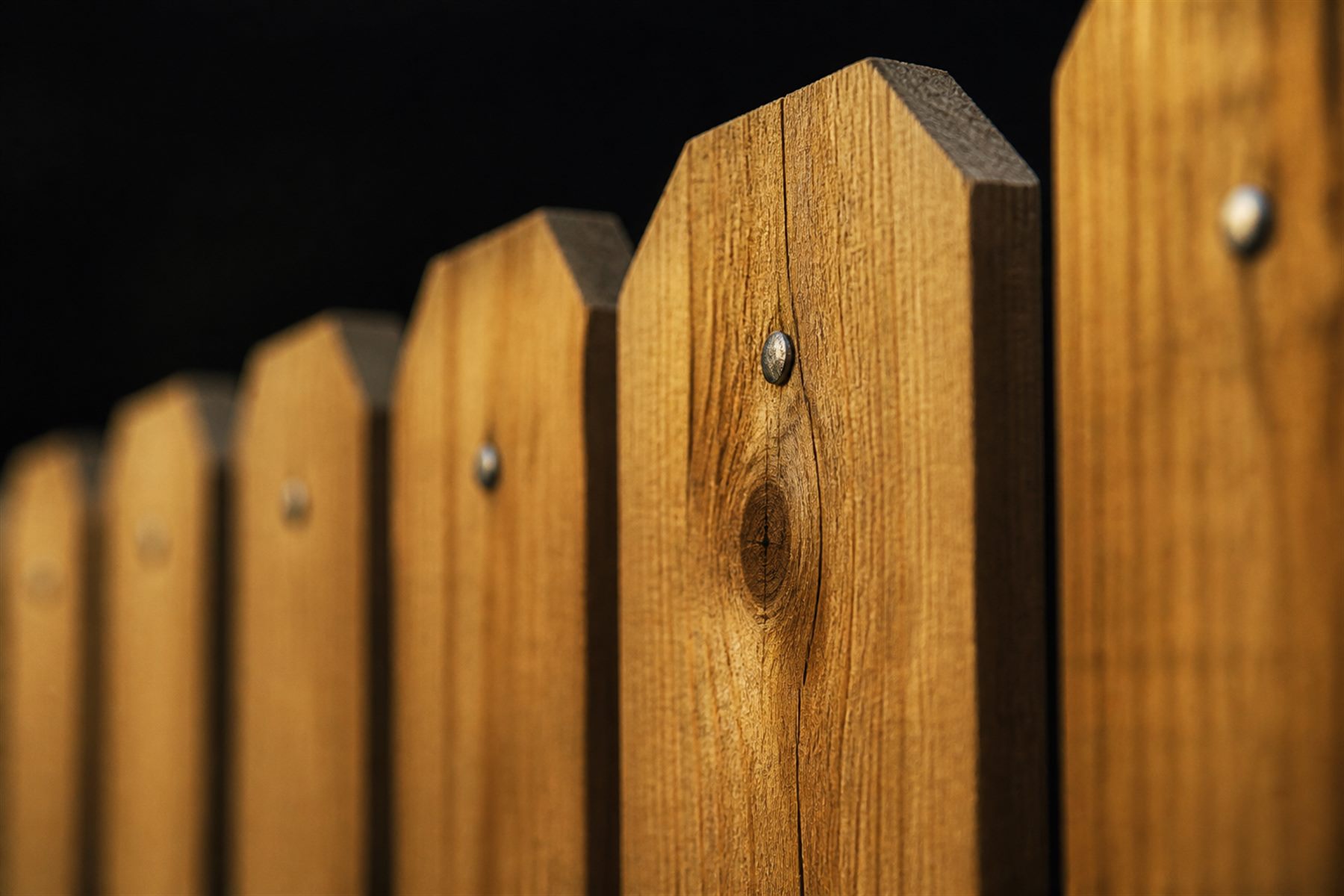
Cedar or pressure-treated pine, dog-ear or board-on-board, stepped or racked to follow the grade.
- Posts set below frost line and backfilled
- Ring-shank fasteners, no staples on pickets
- Gate posts upsized where a swing gets heavy
Teddy Hemingway builds wood, iron, and chain-link fence for Marion County homes, farms, and work yards — set to a string line, backfilled properly, and left clean.
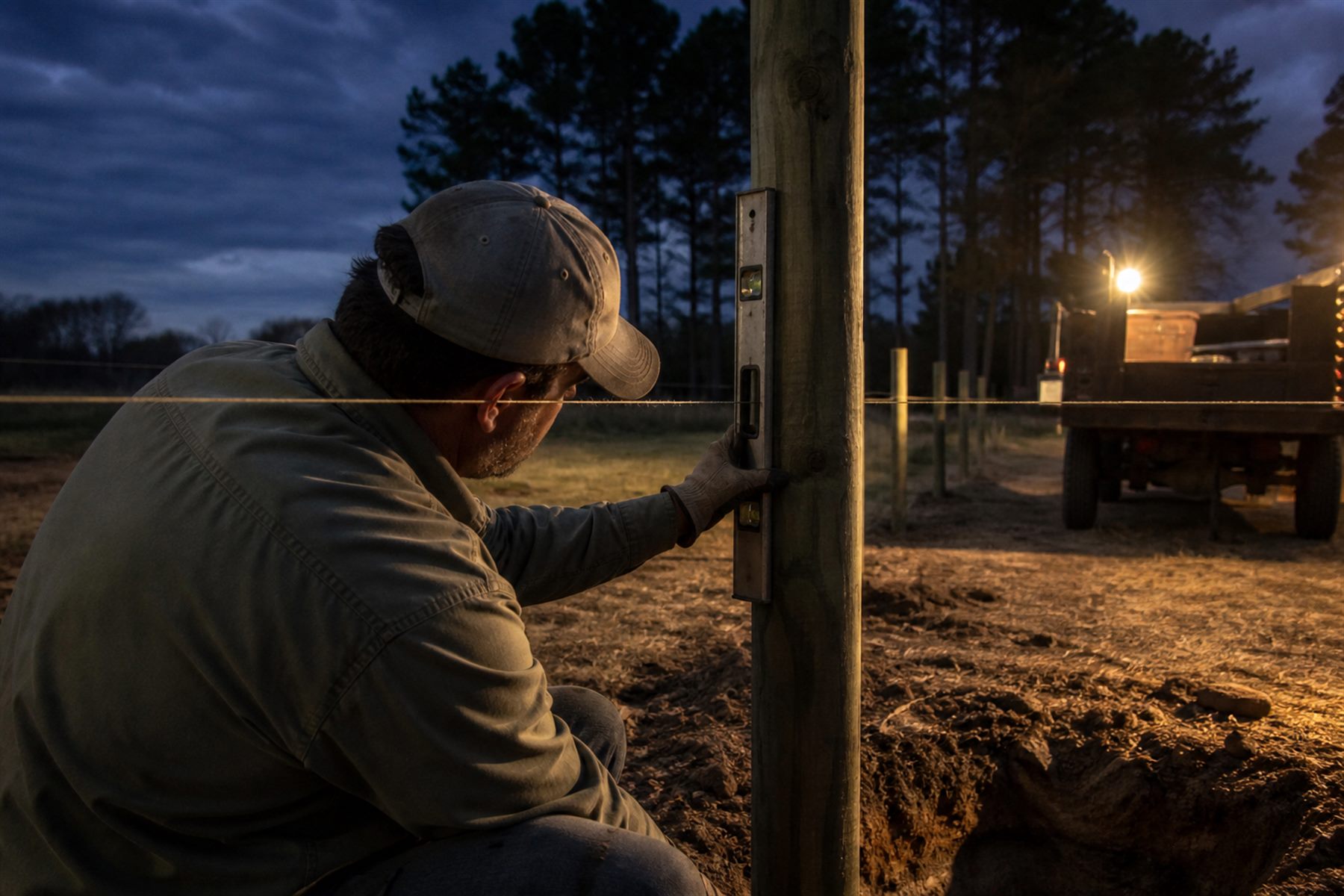
Most fence problems start before the first hole: a corner guessed at, a slope ignored, a gate placed where the truck has to back in. Teddy walks the property line with you first, marks the corners and gate spots, and says plainly what the lot needs.
Everything after that is ordinary craft — posts deep enough for Pee Dee soil, rails cut square, hardware rated for weather that swings from August heat to a hard January night.
Four kinds of fence, one standard of setting. Tell us what the yard has to do — hold a dog, hide a pool, close a work site, or dress a brick entrance — and we will say which system fits.
Cedar or pressure-treated pine, dog-ear or board-on-board, stepped or racked to follow the grade.

Spear-top or flat-top panels between brick or stone columns, racked for driveways and rolling front yards.
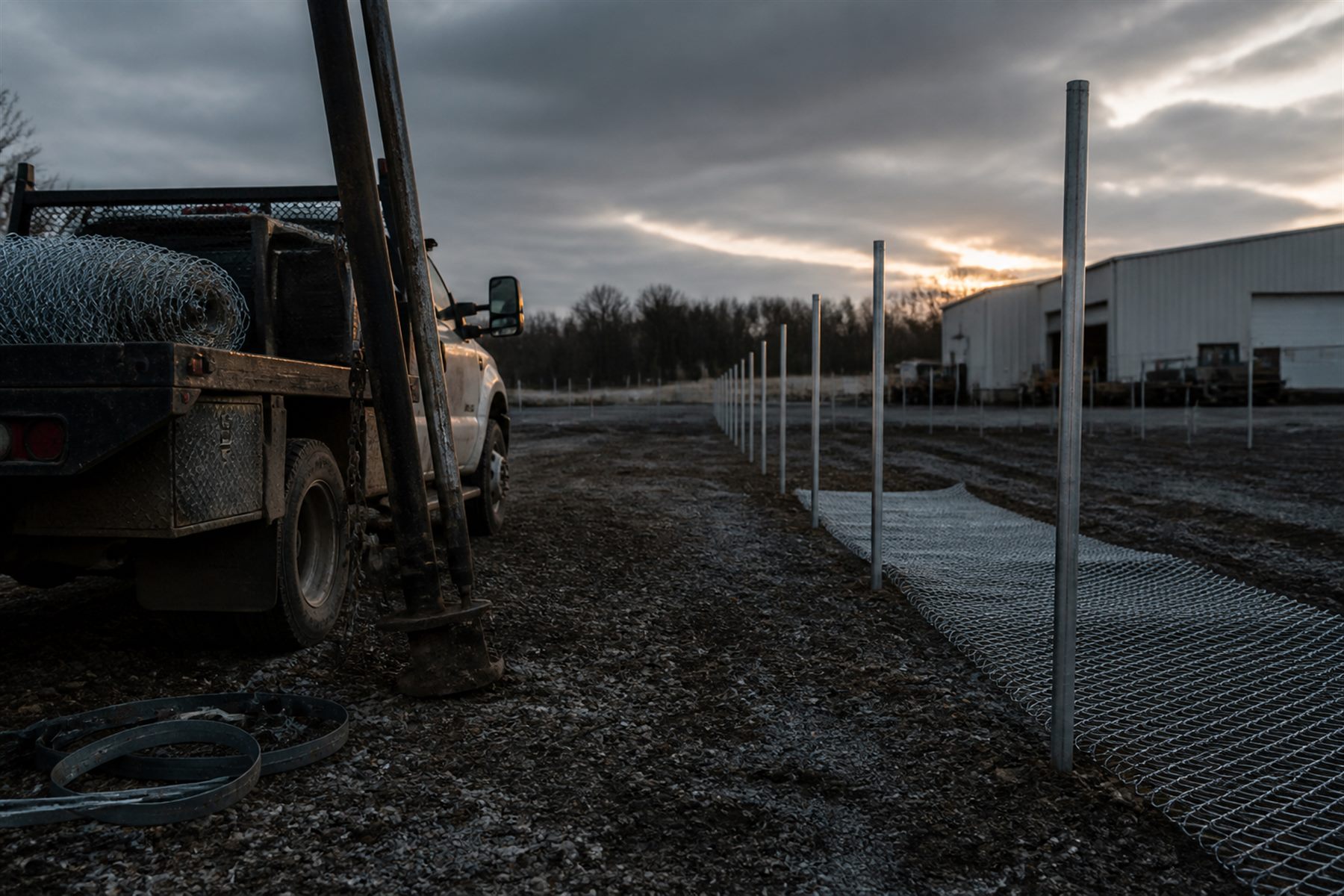
Galvanized or black vinyl-coated mesh for kennels, ball yards, storage lots, and equipment pads.
Sagging gates, leaning corners, storm-broken sections, and hardware that quit — repaired without replacing the whole run.
Four stages, in this order, every job. Nothing gets skipped because the weather looks good.
We meet at the property, find the corners, talk about the plat if the boundary is tight, and mark where gates make sense for mowers, trailers, and trash day.
Utilities get called in before a bit turns. Then the run is laid out with string and paint so you can see the fence on the ground before it exists.
Holes dug to depth, posts plumbed on the line, concrete where the system calls for it. Panels wait until the posts are solid — that is what keeps a line straight in year five.
Panels or pickets go on, gates get set to swing level and latch on the first try, offcuts and dirt piles leave with us, and we walk the finished line together.
No forms full of questions and no email thread. Type ten digits, and Teddy calls back to sort out the details himself.
He showed up, walked the back line with my husband, and told us where the gate ought to go instead of where we asked for it. He was right.
Sixty feet of chain link around the equipment pad, braced and gated for the trailer. Two days, no mess left in the gravel.
Storm took out four sections. He matched the old pickets close enough that you have to hunt for the repair.
You are not handed to a call center or a rotating sub. The same outfit that quotes your fence is the one setting posts in your yard.